29 June 2026 to 3 July 2026
University of Naples Federico II Conference Center
Europe/Rome timezone

Keynotes Lectures

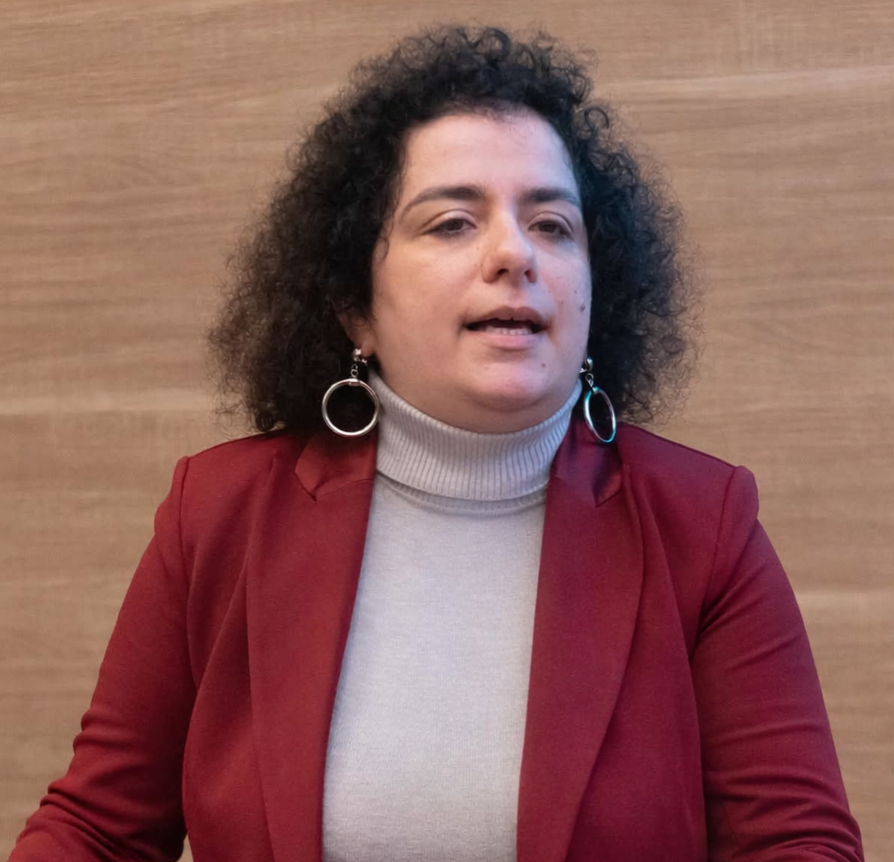
Ester D’Accardi
Polytechnic University of Bari
Italy

Ester D’Accardi, PhD is currently an RTD-A Researcher in Mechanical Design and Machine Construction at the Polytechnic University of Bari, where she also obtained her PhD in Mechanical and Management Engineering in 2020. Since the beginning of her PhD, her research has consistently focused on quantitative infrared thermography applied to non-destructive testing (NDT), process monitoring and material characterization. Her activity focuses on the development of experimental procedures and data analysis methods aimed at moving from qualitative defect detection to quantitative characterization, including defect sizing, depth estimation and probability of detection (POD) assessment. She has investigated fatigue crack characterization under realistic inspection conditions and the use of induction, conduction and laser thermography for industrial NDT scenarios. A significant part of her research concerns additive manufacturing, covering both online thermographic monitoring during fabrication and offline inspection for the process and material characterization, as well as detection and quantitative assessment of typical defects such as lack of fusion, keyhole defects and porosity. She collaborates with international institutions such as BAM, TU Leoben and A*STAR IMRE, recognized centers of excellence in thermography and materials research, as well as with industrial partners including Baker Hughes. Her scientific activity, consistently developed in the field of infrared thermography, is directed toward the definition of quantitative, experimentally validated procedures to support industrial non-destructive testing and process monitoring.


From Process Control to Material Characterization: The Versatility of Thermal Methods in Additive Manufacturing

Laser-based additive manufacturing processes such as Laser Powder Bed Fusion (L-PBF) and Directed Energy Deposition (DED) are intrinsically governed by highly dynamic thermal conditions. Local heat accumulation, cooling rates and spatial temperature distributions directly influence defect formation, such as keyhole porosity and lack of fusion, as well as the resulting microstructure and mechanical performance. Thermal methods provide a complete and scalable approach to investigate these phenomena across di erent high di usive and fast materials, across aluminum alloys (AlSi10Mg), nickel-based superalloys (Inconel 718), super-duplex (F55) and more conventional steels (AISI 316L). During fabrication, in-situ infrared monitoring is based not on absolute temperature measurement, which is strongly a ected by emissivity uncertainties and melt pool evaluation, but on the extraction of robust thermal features. Parameters such as maximum apparent temperature, cooling slope, and statistical thermal features of reconstructed thermal fields are correlated with process parameters such as laser power, scanning speed, energy density and build position. This feature-based approach allows the identification of stable operating ranges of process parameters and the detection of conditions leading to defect formation, such as keyhole porosity or lack of fusion, without requiring complex emissivity calibration. The methodology has been demonstrated to be implementable with both cooled infrared cameras and microbolometric sensors, enabling robust and scalable industrial deployment. Offline, active thermographic testing adopts a similar feature-extraction strategy to detect and localize sub superficial real defects, typical of additive manufacturing processes. Laser thermography has been applied as active thermographic technique to inspect specimens with process-induced and artificial defects of real and complex geometry, validated by micro-computed tomography. Detection capability is analysed as a function of defect type, depth, morphology and material thermal di usivity. Particular attention is devoted to the quantitative characterization of clusters of keyhole porosity and lack-of-fusion regions, which produce distinct thermal signatures. Across on-line monitoring and o -line non-destructive evaluation, thermal feature extraction provides a versatile methodology applicable to di erent additive manufacturing processes, materials, defect types, and inspection conditions. The consistent use of measurable thermal descriptors enables a quantitative characterization of process parameter ranges, defect formation mechanisms, and their influence on resulting material microstructure and final mechanical performance. Thermal analysis thus becomes a practical tool for evaluating both process stability and material integrity in metal additive manufacturing.


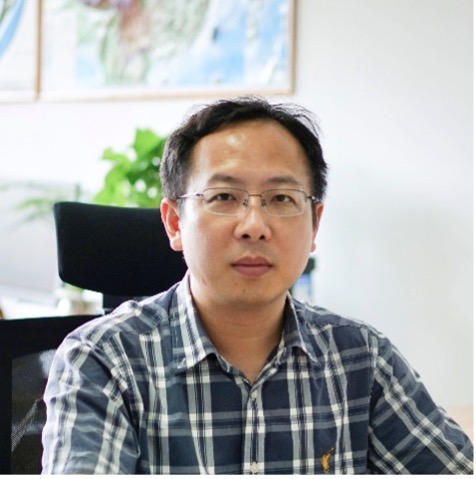
Yi Liu
University of Jiangsu
China

Yi Liu received B.S. degree in mechanical engineering from Jiangsu University, Zhenjiang, China, in 2004, and the Ph.D. degree in control theory and engineering from Zhejiang University, Hangzhou, China, in 2009. He was an Assistant Professor from 2009 to 2011, then an Associate Professor from 2011 to 2020, both with the Institute of Process Equipment and Control Engineering, Zhejiang University of Technology, Hangzhou, China. He was a Postdoctoral Researcher with the Department of Chemical Engineering, Chung-Yuan Christian University, Chung-Li, from 2012 to 2013. Since 2020, he has been a Full Professor with Zhejiang University of Technology, Hangzhou, China. He has published more than 100 research papers at IEEE Transactions and international journals. His research interests include data intelligence methods with applications to modeling, control, and optimization of industrial processes. Prof. Liu has been serving as an Associate Editor for Quantitative InfraRed Thermography Journal and Acta Automatica Sinica..


Recent advances on unsupervised learning methods in active infrared thermography for defect detection

The presence of internal defects poses a serious challenge to the structural integrity and performance of composite materials such as polymers and cultural heritage. Active infrared thermography (AIRT) is becoming increasingly attractive among many non-destructive testing techniques due to its low-cost and wide-area coverage advantages. However, thermograms often involve non-uniform backgrounds and measurement noise caused by uneven heating and environmental reflections, necessitating post-processing procedures. Unsupervised machine learning methods have shown promising success in AIRT for defect detection. This presentation aims to provide recent advances on unsupervised machine learning-aided thermography for defect detection. In particular, deep learning methods for thermographic data analysis are reviewed and emphasized. Finally, an outlook on the prospects and potential of these methods is provided.


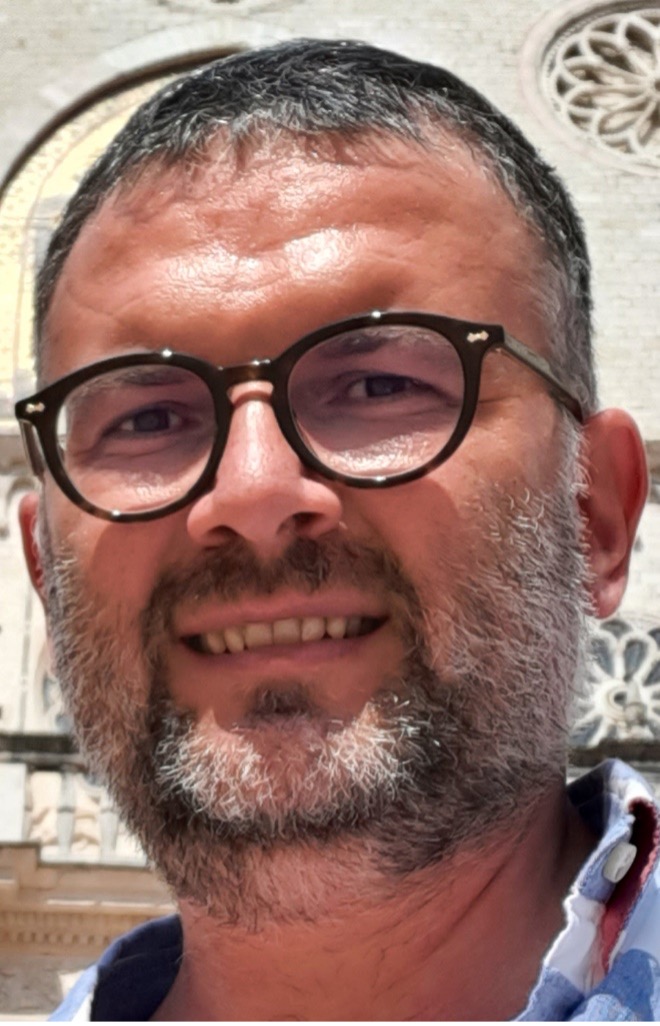
Stefano Sfarra
University of L’Aquila
Italy

Professor Stefano Sfarra attained a Ph.D. title in mechanical, management and energy engineering at the University of L’Aquila (UNIVAQ), Italy, in 2011. Following the achievement of the Ph.D., he was a research fellow at UNIVAQ until 2017, before becoming a researcher in October of the same year.
He carried out research and teaching periods abroad at prestigious institutions all over the world. He was also an invited-scientific researcher at Tomsk Polytechnic University (Tomsk, Russia), as well as a member of several scientific committees at international conferences.
He is also an editor of Infrastructures (MDPI), and Sensors (MDPI). Since December 2020, he is the editor-in-chief (EiC) of the Quantitative InfraRed Thermography (QIRT) Journal (Taylor & Francis). He is deeply involved in the non-destructive evaluation and characterization of materials, especially using optical and infrared vision non-destructive testing techniques, numerical simulations centered on heat transfer phenomena (by Comsol© Multiphysics), development of ad hoc scripts in Matlab©environment, and inverse thermal modelling.
In these research areas, Prof. Sfarra authored or co-authored more than 300 papers in Journals and International Conferences. He also have written seven chapters in Books. He is currently acting as a reviewer of around 50 scientific journals; he is principal investigator, collaborator and local contact person in international research projects.
He is also a member of Associazione MASTER, Associazione Italiana della Fisica Tecnica and Associazione Italiana Proprietà Termofisiche.
He received many awards, mainly focused on scientific recognition.
In October 2020, he became associate professor at UNIVAQ. He has been an adjunct professor at Laval University (Canada).


Learning & Physical Thermographic Models for the Evaluation of Thermophysical Properties in Materials-Structures and the Optimal Image Processing

Infrared thermography captures surface temperature fields that can visualize subsurface defects, yet conventional analyses are hampered by sensor noise and imperfect heat-conduction models. The physics-guided (informed) neural reconstruction framework can be developed embedding heat-transfer priors within a deep network to recover a denoised, physically consistent background from raw thermal sequences. Differential maps between this reconstruction and the original measurements selectively amplify defect contrast while suppressing background clutter. Thanks to examples, effectiveness is demonstrated on laboratory-fabricated and handmade specimens, yielding improved background restoration, more reliable defect characterization, and the estimation of unknown physical parameters such as, e.g., the material’s thermal diffusivity. Comparison with standard (well-recognized) techniques are also discussed.


Mathias Ziegler 
Federal Institute For Materials Research and Testing (BAM)
Germany

Dr. Mathias Ziegler brings over 20 years of hands-on experience in thermography to his work. He earned his PhD in Physics in 2009 for his research on high-power laser diodes. Since 2010, he has been with the Federal Institute for Materials Research and Testing (BAM). There, his focus has been on laser-based active thermography, and he has served as the Head of the Thermographic Methods Division since 2022. Beyond his research, Mathias is deeply committed to the practical application and reliability of thermography through standardization, an area he has been actively shaping for over a decade. He currently serves in leading roles, including convenor for CEN/TC 138/WG 11, convenor for ISO/TC 135/SC 8/WG 5, and chair of the German DIN committee for thermographic testing.


From Lab to Industry: Standardization as the Bridge for Innovative Thermography Applications

Standardization is a fundamental prerequisite for the successful transfer of new Non-Destructive Testing (NDT) technologies, particularly active thermography, into concrete industrial applications. While research drives innovation, standardization creates the necessary technical, legal, and economic basis to make these procedures objective, reproducible, and independent of the specific user. Without uniform standards, the in-dustry faces a lack of trust, comparability, and compatibility, which significantly hinders the broad acceptance and dissemination of new processes. Recognized standards are therefore crucial for meeting safety and quality requirements—especially in regulated sectors like aviation and medical technology—while simultaneously reducing invest-ment risks for companies and accelerating approval and certification processes. This contribution provides a comprehensive look at the current status and future de-velopments of thermography standardization at both European and international lev-els. We offer insights into the effective work of the responsible European committee, CEN/TC 138/WG 11 “Thermographic testing.” Current efforts include the revision of the basic standard for active thermography, EN 17119, to ensure it remains fit for the fu-ture, as well as projects focusing on inductively excited thermography and testing with pulsed optical energy sources. On the international stage, under ISO/TC 135/SC 8, similar efforts are underway to update the nomenclature of infrared thermography (ISO 10878) and to develop the first globally harmonized application standard for active thermography with laser excitation, based on EN 17501. However, the transition from research to application often reveals gaps that impede implementation. Users of modern testing technologies increasingly demand recog-nized reference test specimens, reference procedures, and the metrological assurance of test equipment. Addressing these needs is vital for establishing trust in daily indus-trial operations. Looking ahead, the roadmap for standardization must evolve to reflect industrial realities. Once fundamental standards defining the testing methods are es-tablished, future work must extend beyond specific applications, such as weld testing, to address the integration of automation and Artificial Intelligence (AI) compatibility into the testing workflow. Finally, this presentation emphasizes that standardization is not the task of a closed circle but relies on consensus and the active participation of experts from industry, ac-ademia, and service providers. We invite the community to engage in this collaborative process. By translating expertise into universally applicable rules, standardization acts as the essential bridge that transforms innovative technologies into verifiable, econom-ically viable, and widely adopted industrial processes.